How to Choose Between Full Stack, Data Science, Cybersecurity and Cloud
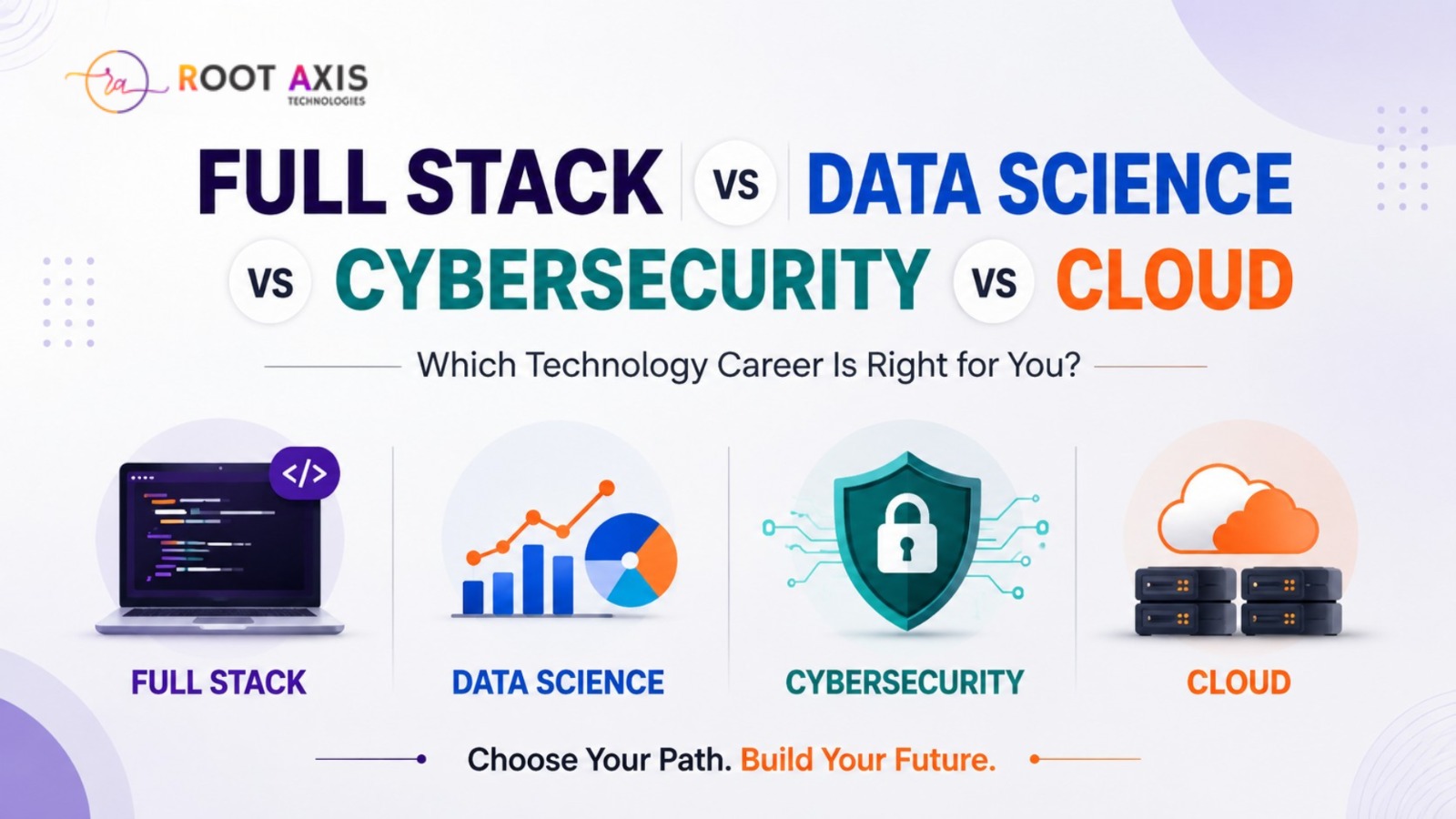
The technology industry is growing fast. Students today have more career options than ever before. Full Stack Development, Data Science, Cybersecurity, and Cloud Computing are four of the most popular paths. Each field is different. Each needs different skills. Each solves different problems.
Choosing between these fields can feel confusing. Every course ad seems to push a different technology as “the next big thing.” Don’t pick a course just because it’s trending. Instead, understand what each field actually involves. Then check if it matches your interests and strengths.
The right career path isn’t the one with the highest salary. It isn’t the one with the trendiest job title either. The right path is the one you enjoy learning. It’s the one you’ll practise consistently. Over time, it becomes a strong professional skill.
Understanding the Four Technology Career Paths
Before you decide, learn the basic differences.
Full Stack Development focuses on building websites and software applications. Data Science focuses on working with data, finding patterns, and generating insights. Cybersecurity protects systems, applications, networks, and information from threats. Cloud Computing manages servers, infrastructure, deployment, storage, and scalability.
These four areas are different. But they’re also connected. A Full Stack Developer might build an app. That app gets hosted on the cloud. Data teams analyse how people use it. Cybersecurity professionals protect it.
So picking one specialisation doesn’t lock you out of the others later.
Is Full Stack Development Right for You?
Do you enjoy creating websites and digital products? Full Stack Development would be a great fit. Full Stack Developers work on both the frontend and backend of an application. This means they understand how a complete product works, end-to-end.
Frontend development covers what users see and interact with. Common tools here include HTML, CSS, JavaScript, React, and Angular. Backend development handles the logic behind the scenes — databases, APIs, authentication, and servers. Developers often use Python, Java, Node.js, PHP, or .NET for this.
One big advantage: you can turn knowledge into projects quickly. Start with a simple website. Then build something bigger — an e-commerce platform, a student management system, a job portal, or a booking app.
Full Stack Development suits people who enjoy coding and want to see fast results. If you like solving programming problems and building things from scratch, explore this field further.
But coding alone isn’t enough. You’ll also need to understand databases, APIs, Git, debugging, and software architecture. Practical project experience makes a real difference here.
Is Data Science Right for You?
Data Science works differently. Instead of building applications, it focuses on understanding data. That data then solves business and real-world problems.
Every organisation generates data — through websites, apps, customers, transactions, and internal systems. Data Science helps make sense of this information. It turns raw numbers into better decisions.
A Data Science professional collects data, cleans it, analyses it, and builds visualisations. They also spot patterns and build predictive models. Python and SQL are the most common tools. Libraries like Pandas, NumPy, Matplotlib, and Scikit-learn come in handy too.
Do you enjoy mathematics, statistics, and analytical thinking? Data Science might interest you. It’s also a good starting point if you’re curious about Artificial Intelligence and Machine Learning.
For example, a Data Science project could predict which customers might stop using a service. Another could forecast future sales using historical data. These examples show how data becomes real business insight.
Data Science takes patience, though. Learning Python alone won’t make you a Data Scientist. You’ll need to understand data analysis, statistics, SQL, machine learning, and clear communication.
Ask yourself: Do you enjoy asking “Why did this happen?” or “What might happen next?” If yes, Data Science could suit you.
Is Cybersecurity Right for You?
Cybersecurity keeps growing in importance. Businesses, governments, schools, and individuals all depend on digital systems now more than ever.
Cybersecurity professionals protect applications, networks, systems, and data. Their work includes vulnerability assessment, security monitoring, incident response, and threat analysis.
This field suits people who enjoy investigating problems. Instead of just building a system, cybersecurity professionals think about how it could be attacked. They look for weaknesses. Then they fix them.
Cybersecurity isn’t just about learning hacking tools, though. You’ll need a strong foundation in networking, operating systems, Linux, authentication, and basic scripting.
Beginners should start with the fundamentals. Learn how computers and networks work first. Advanced security concepts come later.
Do you enjoy investigation, logical thinking, and understanding how systems work? Cybersecurity might be your path.
Is Cloud Computing Right for You?
Cloud Computing has changed how businesses use technology. Companies no longer depend entirely on physical servers. Instead, they use cloud platforms to deploy apps, store data, and scale systems.
Cloud professionals work with platforms like AWS, Microsoft Azure, or Google Cloud. Their work includes deployment, server management, networking, storage, and automation.
This field suits students curious about what happens after an app is built. Full Stack Development focuses on building the app. Cloud Computing focuses on where and how it runs.
As you progress, you’ll likely explore Linux, networking, Docker, Kubernetes, Git, CI/CD, and DevOps.
Do you enjoy infrastructure, servers, and automation? Cloud Computing could be a strong fit.
Which One Should You Choose?
There’s no single “best” technology career. Your choice depends on what kind of work you enjoy.
Like building websites and writing code? Try Full Stack Development. Enjoy numbers, statistics, and patterns? Try Data Science. Curious about security and investigation? Try Cybersecurity. Interested in servers and automation? Try Cloud Computing.
Every one of these careers needs consistent learning. Watching a few videos won’t make you job-ready. Neither will a short course, on its own.
Don’t Choose a Course Just Because It’s Trending
Many students pick a course based on social media trends or friends’ opinions. That’s a common mistake.
A trending technology isn’t automatically the right choice for you. For example, someone who dislikes maths might struggle with Data Science — even if it promises great job opportunities. Similarly, someone who doesn’t enjoy coding might find Full Stack Development frustrating.
Instead, understand the real work behind each career. Ask yourself: What problems do I enjoy solving? Do I prefer building, analysing, protecting, or managing infrastructure?
Your honest answer gives you a much better starting point.
Skills That Help in Any Technology Career
No matter which field you choose, some skills stay valuable everywhere.
Problem-solving matters most. Developers, analysts, security specialists, and cloud engineers all face problems without obvious answers. Researching, experimenting, and debugging become daily habits.
Communication matters too. You’ll explain ideas to teammates, managers, and non-technical people. Being technically skilled but unable to explain your work can limit your growth.
Practical experience builds real skill. Don’t just collect certificates. Build projects. See how technologies work together in practice.
Continuous learning keeps you relevant. The industry keeps changing — new tools, frameworks, and platforms appear constantly. Stay curious. Keep improving.
How Students Can Make the Right Decision
Still confused? Don’t rush the decision.
Start by exploring the basics of each field. Write a simple program. Analyse a small dataset. Learn basic networking. Deploy a simple app to the cloud.
You’ll likely find that one activity feels more interesting than the rest.
For example: Enjoyed fixing errors while building a small app? Explore Full Stack Development further. Enjoyed finding patterns in a dataset? Data Science might fit better.
Interested in network security? Try Cybersecurity. Enjoyed understanding servers and deployment? Cloud Computing could work for you.
Small, hands-on experiences often teach you more than reading ever will.
Can You Learn More Than One Technology?
Yes — and many professionals do exactly that.
A Full Stack Developer might later learn Cloud Computing and DevOps. A Data Scientist might move into Machine Learning. A Cloud Engineer might specialise in Cloud Security. A Cybersecurity professional might build expertise in cloud infrastructure security.
You don’t have to pick one technology and stick with it forever. Build a strong foundation first. Then expand your skills gradually.
Full Stack, Data Science, Cybersecurity or Cloud: Which Is Best?
The answer depends entirely on you.
There’s no universal “best” career. The best choice matches your interests, learning style, and long-term goals.
Choose Full Stack Development if you love building applications. Choose Data Science if you enjoy numbers and analysis. Choose Cybersecurity if security and investigation excite you. Choose Cloud Computing if infrastructure and automation interest you.
Don’t ask which field is “best.” Ask which field you can see yourself practising consistently.
Final Thoughts
Choosing a technology career feels like a big decision — especially when you’re just starting. Full Stack Development, Data Science, Cybersecurity, and Cloud Computing all open different doors. But don’t pick one just because it’s popular.
Take time to understand each field. Explore the fundamentals. Try small projects. Notice which problems you enjoy solving. Once something clicks, focus on building strong fundamentals and real experience.
Your career isn’t built by collecting certificates. It’s built through knowledge, practice, projects, and continuous improvement.
Choose your path based on genuine interest. Build your skills through practice. Start creating a career around what you actually enjoy learning.
Start Your Technology Learning Journey with RootAxis
At RootAxis, students and freshers explore industry-relevant tech skills through practical, project-based training.
Whether you’re drawn to Full Stack Development, Data Science, Cybersecurity, Cloud Computing, Artificial Intelligence, or other emerging technologies — choosing the right path is step one.
Learn the fundamentals. Work on real projects. Sharpen your skills. Prepare for what’s ahead.
Your technology career starts with the skills you choose to build today.
Frequently Asked Questions
1. Which is better — Full Stack Development, Data Science, Cybersecurity, or Cloud Computing?
There’s no single best career for everyone. Full Stack Development suits students who enjoy coding. Data Science suits those who enjoy data and analysis. Cybersecurity suits people interested in protecting systems. Cloud Computing suits those interested in servers and infrastructure. Your choice depends on your interests and goals.
2. Which technology course is best for beginners?
It depends on what you enjoy. Like programming? Start with Full Stack Development. Interested in data? Try Data Science. Curious about security? Begin with Cybersecurity fundamentals. Interested in infrastructure? Consider Cloud Computing.
3. Is Data Science difficult to learn?
It can be challenging — it combines programming, statistics, data analysis, and machine learning. Start with Python, SQL, and basic statistics. Then move into advanced concepts step by step.
4. Can I learn more than one technology?
Yes. Many professionals do this. A Full Stack Developer can learn Cloud Computing. A Data Scientist can move into AI. A Cloud Engineer can develop Cybersecurity skills. Still, build a strong foundation in one field first.
5. Are certificates enough to get a technology job?
No, not by themselves. Practical projects, technical skills, problem-solving, internships, and communication all matter too. Real projects help you stand out from candidates who only hold certificates.