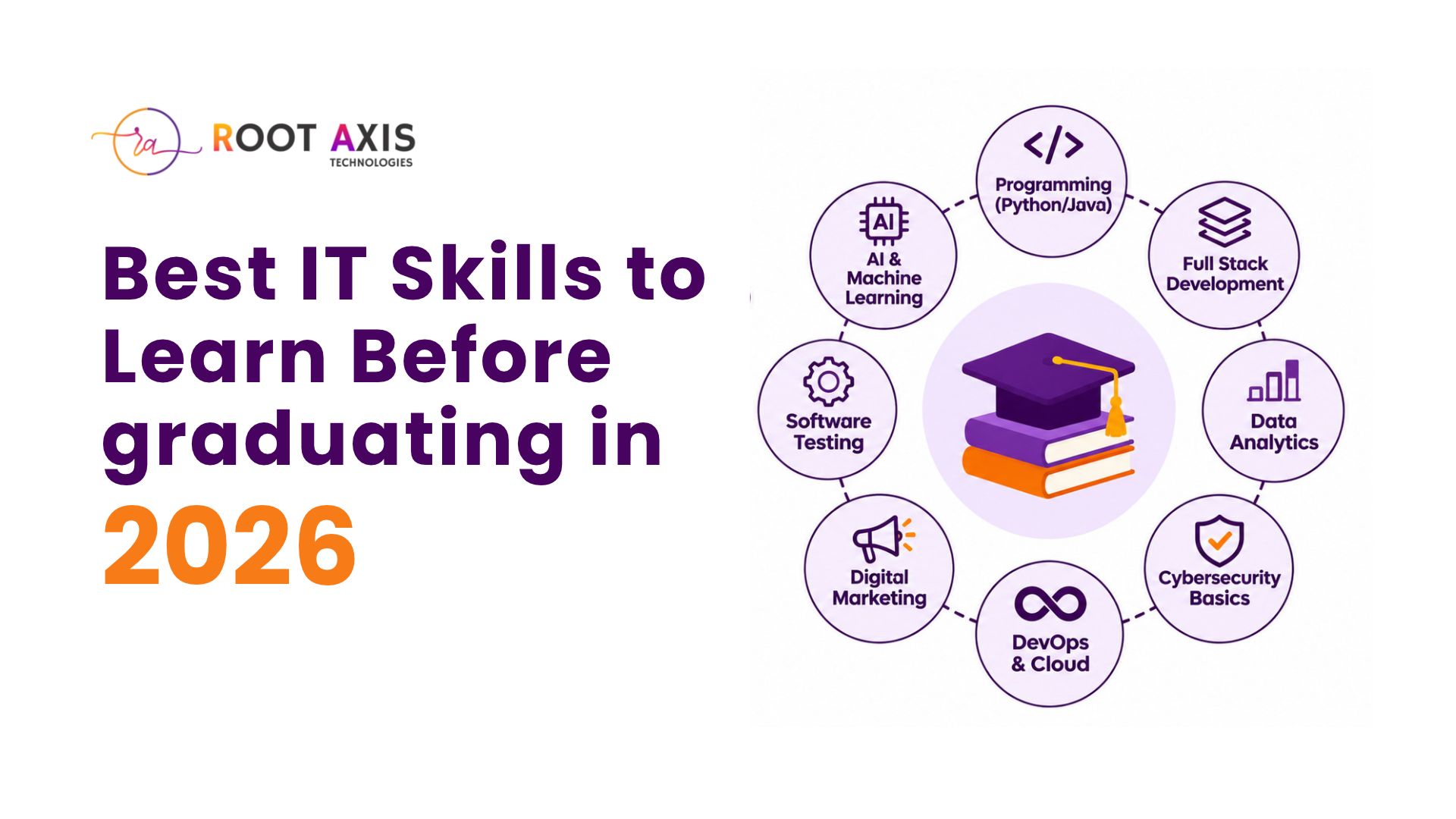
Why IT Skills Matter More Than Ever for Graduates
Technology keeps changing, and companies now expect new graduates to contribute faster. Hiring managers look for three things: strong fundamentals, hands-on projects, and the ability to keep learning. Skills in cloud, AI, security, and data are showing up in job descriptions across almost every industry, not just in tech companies.
If you focus on the right skills early, you will stand out in a crowded fresher job market.
1. Programming Fundamentals (Python, JavaScript, or Java)
Every IT career starts with coding logic. You do not need to master five languages. Pick one and go deep.
- Python: beginner-friendly, used in automation, data science, AI, and backend work.
- JavaScript: essential for web development, front-end and back-end.
- Java: still widely used in enterprise software and Android development.
How to start: Solve problems on platforms like LeetCode or HackerRank, and build two or three small projects such as a to-do app, a budget tracker, or a simple API.
2. Data Structures and Algorithms
Most technical interviews test how you think, not just what you know. Understanding arrays, linked lists, trees, graphs, sorting, and searching helps you write efficient code and perform well in interviews at product and service companies alike.
How to start: Practice a few problems every day for 30 to 60 days. Consistency beats cramming.
3. Cloud Computing (AWS, Microsoft Azure, or Google Cloud)
Companies of every size run on the cloud. Knowing how to deploy, store, and scale applications makes you immediately more valuable.
- Learn core ideas: virtual machines, storage, networking, databases, and serverless functions.
- Aim for an entry-level certification such as AWS Cloud Practitioner, Azure Fundamentals (AZ-900), or Google Cloud Digital Leader.
How to start: Use the free tier of a major cloud provider and deploy one of your own projects.
4. Cybersecurity Basics
Every organization needs people who understand security. Even if you do not become a security specialist, knowing the basics makes you a better developer, admin, or analyst.
- Understand common threats such as phishing, malware, and SQL injection.
- Learn about authentication, encryption, firewalls, and secure coding practices.
- Consider beginner certifications like CompTIA Security+ or ISC2 Certified in Cybersecurity.
How to start: Try beginner-friendly labs on platforms like TryHackMe or Hack The Box.
5. AI and Machine Learning Literacy
AI tools are now part of everyday work. You do not need a research background, but you should understand how machine learning works and how to use AI responsibly.
- Learn the basics of machine learning concepts and common libraries such as scikit-learn.
- Practice prompt engineering and using AI assistants to write, debug, and explain code.
- Understand the limits of AI, including errors, bias, and data privacy.
How to start: Build a small project, such as a spam classifier or a chatbot using an AI API, and add it to your portfolio.
6. Data Analysis and SQL
Data drives decisions in every business. SQL remains one of the most requested skills across analyst, developer, and QA roles.
- Learn SQL for querying and joining databases.
- Learn Excel or Google Sheets, then move to Python (pandas) or a visualization tool such as Power BI or Tableau.
How to start: Download a public dataset, clean it, analyze it, and present your findings in a simple dashboard.
7. Version Control with Git and GitHub
Almost every software team uses Git. Knowing how to commit, branch, merge, and create pull requests shows that you can work in a real team environment. Your GitHub profile also doubles as a public portfolio.
How to start: Put every project on GitHub with a clear README that explains what it does and how to run it.
8. DevOps and Automation Basics
Modern teams ship software quickly, and DevOps skills help them do it reliably.
- Learn Linux command-line basics.
- Understand CI/CD pipelines (GitHub Actions is a great starting point).
- Get familiar with Docker, and later Kubernetes.
How to start: Containerize one of your projects with Docker and set up an automated build.
9. Networking and Operating System Fundamentals
Solid basics set you apart. Understand how the internet works, including IP addressing, DNS, HTTP, and TCP. Know how operating systems manage processes and memory. These fundamentals help in support, cloud, security, and development roles.
10. Soft Skills That Employers Value
Technical skill alone is not enough. Employers consistently look for:
- Clear communication, both written and spoken.
- Problem-solving and curiosity
- Teamwork and openness to feedback
- Time management and adaptability
Practice by explaining your projects to non-technical friends, writing short blog posts about what you learn, and joining group projects or hackathons.
How to Build a Job-Ready Portfolio
Skills only count when you can prove them. Before you graduate, aim to have:
- Two to three real projects that solve a clear problem
- A polished GitHub profile with readable code and documentation
- A LinkedIn profile that highlights skills, projects, and certifications
- One internship, freelance task, or open-source contribution for real-world experience
- A one-page resume tailored to the job you want
A Simple Learning Roadmap for Final-Year Students
- Months 1 to 2: Programming basics, Git, and problem-solving
- Months 3 to 4: Data structures, SQL, and your first project
- Months 5 to 6: Cloud fundamentals plus one certification
- Months 7 to 8: Specialize in AI, security, web development, or DevOps
- Final months: Polish your portfolio, practice interviews, and apply
If you have less time, focus on one programming language, SQL, Git, and one cloud certification. That combination alone makes a strong foundation.
Frequently Asked Questions
Which IT skill is most in demand for freshers in 2026?
Programming, cloud computing, data and SQL skills, and AI literacy appear most often in entry-level job postings. Cybersecurity basics are a strong addition.
Can I get an IT job without a computer science degree?
Yes. Many employers value skills and projects as much as degrees. A strong portfolio, relevant certifications, and good interview preparation can open doors.
How long does it take to learn these skills?
With steady practice, you can learn the basics of most of them in three to six months. Mastery comes with real projects and experience.
Are certifications worth it?
Entry-level certifications can help your resume get noticed, especially if you have limited experience. They work best alongside projects, not as a replacement.
Where can I learn these skills for free?
Free resources include freeCodeCamp, Coursera (financial aid or audit options), YouTube tutorials, official documentation, and cloud provider training portals.
Final Thoughts
The best IT skills to learn before graduating are the ones that make you useful on day one: programming, data skills, cloud, security, AI literacy, and Git, backed by strong communication. You do not need to learn everything. Pick a direction, build real projects, and keep improving a little every day.
Start today with one skill from this list, and your future self will thank you at graduation.
Ready to take the next step? Choose one skill, set a 30-day goal, and share your first project online.