The Growing Importance of Cybersecurity Skills
Table of Contents
Why Cybersecurity Matters More Than Ever
Key Cybersecurity Skills in Demand
How to Build Cybersecurity Skills
Introduction
Every industry today runs on data — financial records, medical histories, personal messages, business strategies. As more of our lives move online, the value of that data has skyrocketed, and so has the number of people trying to steal it. Cybersecurity is no longer a niche IT concern; it’s a core survival skill for individuals, businesses, and governments alike. Building strong cybersecurity skills has become one of the smartest career moves in today’s digital economy, and this shift has created an enormous demand for people who understand information security, data protection, and how to defend against cyber threats. That demand will only grow.
Why Cybersecurity Matters More Than Ever
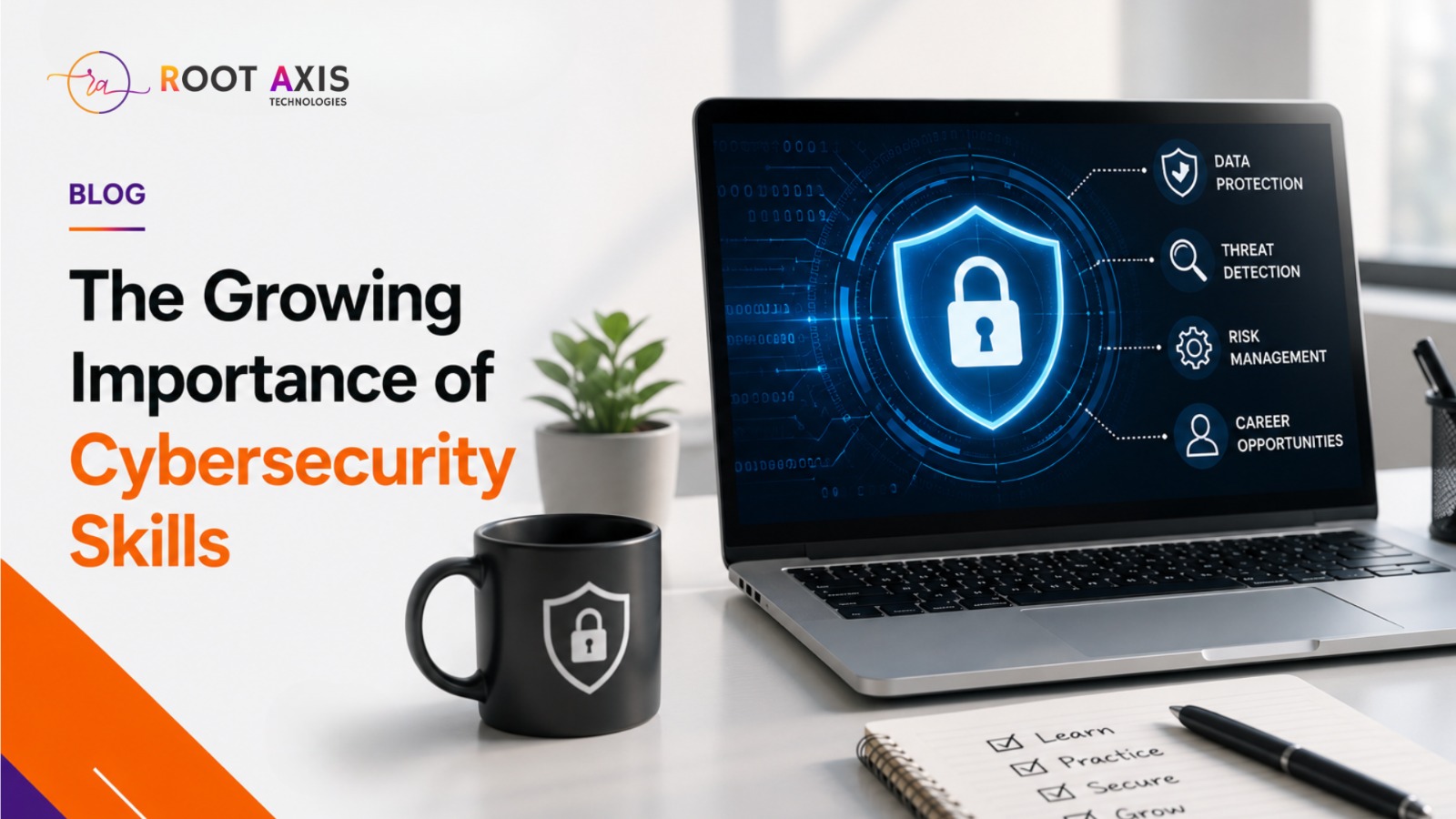
Understanding why cybersecurity matters starts with looking at how much our world has changed. Rising cyberattacks, growing data breaches, and constant network security risks make this one of the most important fields to master today.
1. The Explosion of Connected Devices
From smartphones and laptops to smart fridges, fitness trackers, and industrial sensors, the number of internet-connected devices has multiplied dramatically. Each device is a potential entry point for attackers. This “attack surface” keeps expanding, making it harder for organizations to keep everything secure.
2. Rising Cost of Cyberattacks
Data breaches, ransomware attacks, and phishing scams cost businesses billions of dollars every year — not just in stolen funds, but in downtime, legal fees, and reputational damage. A single successful attack can cripple a small business or erode customers' trust in a large corporation.
3. Remote Work and Cloud Adoption
The shift to remote work and cloud-based tools has blurred the traditional boundaries of a company’s network. Employees now access sensitive systems from home Wi-Fi, personal devices, and public networks — all of which need to be secured differently than a controlled office environment.
4. Sophisticated and Evolving Threats
Hackers are no longer lone individuals in a basement. Many attacks today come from organized groups, and some are even state-sponsored. Techniques like AI-generated phishing emails, deepfake scams, and automated malware make attacks faster, more convincing, and harder to detect.
Key Cybersecurity Skills in Demand
If you’re planning a cybersecurity career, these are the in-demand cybersecurity skills employers look for the most:
Network Security – Learn firewalls, VPNs, and secure network architecture.
Threat Detection & Incident Response – Identifying breaches quickly and containing damage.
Cloud Security – Securing data and applications hosted on platforms like AWS, Azure, and GCP.
Ethical Hacking / Penetration Testing – Thinking like an attacker to find vulnerabilities before criminals do.
Security Compliance & Governance – Knowing regulations like GDPR, HIPAA, and ISO 27001.
Identity and Access Management (IAM) – Controlling who can access what within a system.
Security Awareness & Soft Skills – Communicating risks clearly to non-technical stakeholders.
Who Needs These Skills?
Cybersecurity skills aren’t just for IT professionals anymore. Developers benefit from knowing secure coding practices, business leaders need to understand risk management, and even everyday employees should know how to spot phishing attempts. Cybersecurity has become a shared responsibility across every role in an organization.
How to Build Cybersecurity Skills
Whether you’re aiming for a cybersecurity certification, an ethical hacking role, or a general IT security career, here’s a step-by-step path to build cybersecurity skills from scratch:
Start with the fundamentals – Learn networking basics, operating systems, and how the internet works.
Get certified – Certifications like CompTIA Security+, CEH, and CISSP validate your knowledge to employers.
Practice hands-on – Use platforms like TryHackMe or Hack The Box to practice real-world scenarios safely.
Stay updated – Cybersecurity changes fast; following security news and blogs keeps your knowledge current.
Join a community – Forums, local meetups, and online groups help you learn from others’ experiences.
Conclusion
As technology becomes more woven into daily life, the growing importance of cybersecurity skills will only continue to rise. Organizations need people who can anticipate threats, respond quickly to incidents, and build secure systems from the ground up. Whether you’re a student choosing a cybersecurity career path or a professional looking to future-proof your skills through cybersecurity training, start investing time in cybersecurity today so you can prepare for tomorrow.
FAQ
1. Do I need a computer science degree to work in cybersecurity?
No. While a degree can help, many professionals enter the field through certifications, self-study, and hands-on practice. Employers often value practical skills and certifications as much as formal education.
2. What is the best certification to start with?
CompTIA Security+ is widely recommended as a beginner-friendly certification. From there, you can move on to more advanced ones like CEH (Certified Ethical Hacker) or CISSP as you gain experience.
3. How long does it take to learn cybersecurity basics?
With consistent effort, most people can grasp the fundamentals in 3–6 months. Becoming job-ready for an entry-level role typically takes 6–12 months of focused learning and practice.
4. Is cybersecurity a good career choice?
Yes. Demand for skilled professionals far exceeds supply in most countries, which means strong job security, competitive salaries, and diverse career paths across industries.
5. Can non-technical people still contribute to cybersecurity?
Absolutely. Roles in security awareness training, compliance, policy-making, and risk management often need less coding knowledge but strong communication and organizational skills.
6. What’s the difference between cybersecurity and ethical hacking?
Cybersecurity is the broader field covering all aspects of protecting systems and data. Ethical hacking (or penetration testing) is one specialization within it, focused on finding vulnerabilities by simulating real attacks.
7. How often should I update my cybersecurity skills?
Continuously. Threats and technologies evolve quickly, so staying current through news, courses, and hands-on practice should be an ongoing habit, not a one-time effort.