
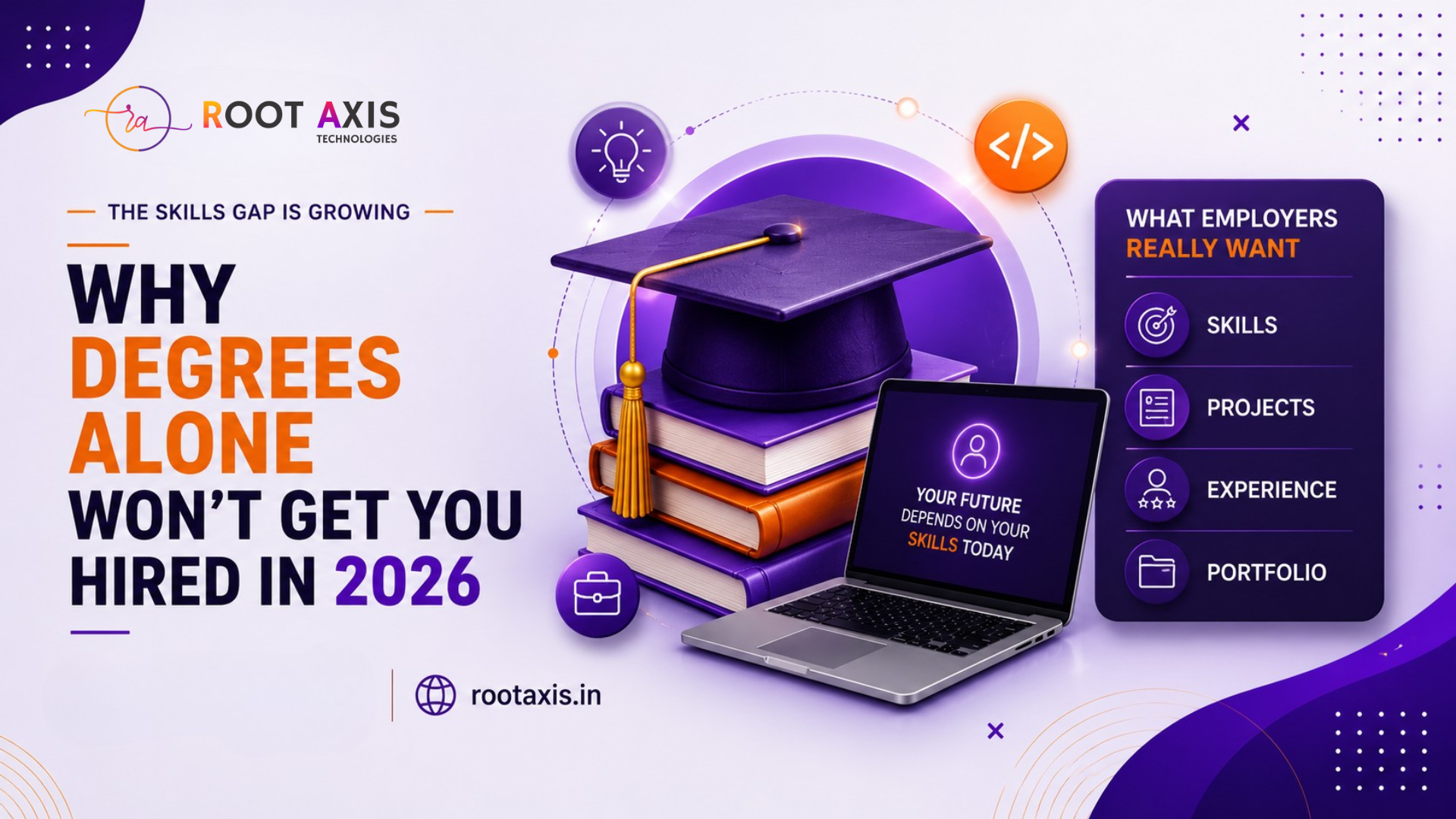
Top 15 In-Demand Skills Companies Are Hiring For in 2026
Top 15 In-Demand Skills Companies Are Hiring For in 2026
By Rootaxis Team · Updated June 2026
What This Guide Covers
- What in-demand skills for 2026 means
- Why skill development is the foundation of long-term career success
- How the right professional skills build workplace credibility
- The top 15 skills that drive real career and business results
- How to build a skill development plan that works
- Frequently asked questions
Professionals who invest in in-demand skills consistently outperform those who rely on outdated qualifications and experience alone. The modern job market demands adaptability, technical fluency, and human intelligence. Building future-ready skills makes career growth not just possible — it makes it inevitable.
What In-Demand Skills for 2026 Means
In-demand skills for 2026 are the specific technical and human capabilities that employers across industries are actively recruiting for right now. Rather than relying on broad academic credentials or years of experience, businesses are seeking professionals who bring targeted, applicable, and future-ready knowledge to the roles they fill.
What separates in-demand skills from general professional development is their direct relevance to real business outcomes. Employers are not hiring for theoretical knowledge — they are hiring for the ability to apply skills immediately in ways that reduce costs, accelerate growth, improve customer experience, and create competitive advantage.
Why Skill Development Is the Foundation of Long-Term Career Success
Skill development is the single most important factor in any long-term career growth strategy. Job roles do not stay the same over time. Industries evolve, tools change, and the capabilities required to perform at the highest level shift with them.
The right professional skills grow in value alongside career progression. Most high-impact skills compound over time — the earlier a professional commits to building them, the greater the return.
How the Right Professional Skills Build Workplace Credibility
Credibility is built when professionals show up prepared, deliver consistently, and demonstrate expertise that others rely on. When an individual brings well-developed in-demand skills to their role, that reliability becomes visible. Projects are delivered on time. Decisions are well-reasoned. Clients and colleagues place their trust with confidence.
The Top 15 In-Demand Skills That Drive Real Results
1Artificial Intelligence and Machine Learning
AI and machine learning skills are among the most sought-after capabilities in 2026. Professionals who can build, deploy, and interpret AI-powered systems are in short supply across technology, finance, healthcare, and retail.
2Data Analytics and Visualisation
Data analytics professionals help organisations understand customer behaviour and identify growth opportunities. Proficiency in Python, SQL, Tableau, and Power BI is widely expected.
3Cybersecurity
As digital threats become more sophisticated, demand for skilled cybersecurity professionals continues to grow. Roles in penetration testing, security analysis, and cloud security are among the fastest-growing categories globally.
4Cloud Computing
Professionals who can architect, manage, and secure cloud environments on AWS, Azure, and Google Cloud are consistently in demand. Familiarity with Docker and Kubernetes adds significant additional value.
5Software Development and Engineering
Full-stack development, backend engineering, and mobile application development skills are particularly sought after. Python, JavaScript, TypeScript, and Go appear frequently in job postings across all sectors.
6Digital Marketing and Growth Strategy
Employers are seeking marketers who combine creative content skills with technical capabilities in SEO, paid media, email marketing, and conversion optimisation.
7Project and Product Management
The ability to lead initiatives from concept to delivery is a skill companies across all sectors actively hire for. Agile methodology and tools such as Jira and Asana feature prominently across job descriptions.
8UX and UI Design
Demand for skilled UX and UI designers has grown considerably. Professionals who combine design thinking with proficiency in Figma and the ability to ground decisions in behavioural data are particularly sought after.
9Communication and Presentation
Strong communication remains one of the most universally desired professional skills regardless of industry. In remote and hybrid environments, written communication has become especially critical.
10Critical Thinking and Problem Solving
Automation is replacing routine tasks at scale. What remains uniquely valuable is the capacity for contextual, nuanced problem solving under pressure.
11Emotional Intelligence and Leadership
Organisations performing best in 2026 are led by individuals who can motivate diverse teams and navigate conflict constructively. Emotional intelligence is increasingly treated as a leadership prerequisite.
12Financial Literacy and Commercial Acumen
The ability to read financial statements, evaluate return on investment, and make commercially sound decisions is valued across finance, operations, marketing, and general management.
13Sustainability and ESG Knowledge
Professionals who understand how to integrate sustainability into business operations are increasingly in demand. Roles in ESG reporting, sustainability consulting, and green technology are among the fastest-growing categories globally.
14Adaptability and Learning Agility
The capacity to learn quickly and apply new knowledge with confidence has become a defining characteristic of top performers. Employers are hiring not just for what a candidate knows today but for how quickly they acquire new skills.
15Collaboration and Cross-Functional Teamwork
The ability to collaborate across functions, manage expectations, and build consensus without losing momentum is a skill employers actively screen for, particularly in distributed and hybrid work environments.
How To Build a Skill Development Plan That Works
Audit your current capabilities
Conduct an honest assessment of where you currently stand and identify which skills are creating the most friction in your current role.
Define clear objectives
Are you seeking a career change, a promotion, or a transition into leadership? The objectives must drive the learning decisions, not the other way around.
Select the right learning model
Online courses, certifications, mentoring, on-the-job projects, and structured reading all serve different learning needs. Combining approaches produces better results.
Start with immediately applicable skills
Begin with skills that are relevant to your current role. Early wins build momentum and confidence before tackling more complex or unfamiliar skill areas.
Measure your progress
Track markers such as new responsibilities, salary progression, project outcomes, and professional recognition to confirm your development is delivering real value.
Frequently Asked Questions
What are in-demand skills for 2026 and how do they support career growth?
- In-demand skills are the technical and human capabilities that employers across industries are actively recruiting for right now.
- They support career growth by making professionals more valuable, more adaptable, and better positioned for promotion.
- Developing these skills reduces career risk, improves earning potential, and positions individuals to respond faster to market shifts.
What are the most important professional skills to develop?
- The most important skills span both technical areas such as AI, data analytics, and cloud computing, and human areas such as communication and leadership.
- They matter because they are directly applicable to real business challenges and produce measurable outcomes employers recognise and reward.
How long does it take to see results from a skill development plan?
- Initial results such as increased confidence and new responsibilities can often be observed within the first three to six months.
- Deeper benefits including salary growth and promotion typically develop over the first year of committed learning.
- The compounding effect means results continue to grow the longer an individual remains committed.
Which in-demand skills are most effective across industries?
- Communication, critical thinking, data literacy, and adaptability are among the most universally transferable skills.
- Technical skills such as AI, cloud computing, and cybersecurity deliver the strongest returns in technology-adjacent roles.
- The most effective investments depend on your current role, industry, and specific career objectives.
How do in-demand skills differ from general professional qualifications?
- General qualifications provide foundational knowledge but do not always translate into the specific capabilities employers need today.
- In-demand skills are defined by their immediate applicability to real workplace challenges and direct connection to measurable business outcomes.
- Professionals who invest in relevant, current skills alongside formal qualifications consistently outperform those who rely on credentials alone.
Conclusion
Developing in-demand skills is one of the most reliable and sustainable ways to build long-term career success and professional credibility. Through a consistent approach to skill development that prioritises relevance, application, and genuine business value, professionals can position themselves as indispensable contributors in any organisation.
The key is to start with a clear understanding of your career objectives, commit to a focused development plan you can execute with consistency, and measure the right outcomes over time.
Start building your in-demand skills today — because the professionals advancing tomorrow are the ones who started yesterday.
Start Learning Now →